In the transportation business, the phrases tilt tray and tilt slide are commonly used interchangeably. However, the two truck bodies function differently, particularly in terms of loading angles, vehicle clearance, and the type of equipment they can transport. Choosing the wrong setup can lead to unnecessary loading difficulties, equipment damage or limitations on the jobs your business can accept.
Understanding these distinctions is important for Australian towing, transport, and machinery operators before purchasing new equipment. Custom Transport Equipment (CTE) creates and produces specialised truck bodies, including tilt slides and custom transport solutions. Here’s what separates the two options and how to decide which one is best for your organisation.
What is a Tilt Tray Truck?
A tilt tray truck has a flat loading platform attached to the vehicle’s chassis. Its hydraulic mechanism rises and lowers the tray from the rear, forming an angled ramp for loading vehicles and equipment with a winch. After securing the load, the platform returns to its horizontal transport position.
A tilt tray’s simple design makes it an effective choice for general vehicle recovery, roadside assistance, and car transit. With fewer moving parts than more sophisticated sliding systems, it is also easier to maintain and operate, making it ideal for organisations that do regular towing and recovery work.
For many operators, the combination of functionality and ease of use makes it a reliable transportation solution.
What is a Tilt Slide Truck?
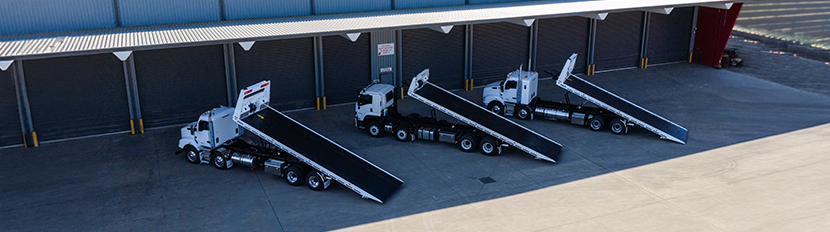
A tilt slide truck takes the loading procedure one step further. Rather than merely tilting the tray, the platform glides backwards along the chassis before lowering to the ground. This allows the rear of the deck to load much lower than a traditional tilt tray.
The reduced approach angle facilitates loading for equipment and trucks that are unable to safely navigate steep ramps. A tilt and slide truck is ideal for moving machinery, forklifts, elevated work platforms, and low-clearance vehicles. Although the mechanism requires additional technical and hydraulic components, it provides more flexibility for transportation needs.
Tilt Tray vs Tilt Slide: Key Differences
While both systems are intended to load and transfer cars or equipment, their operational mechanisms limit the types of jobs they can accomplish efficiently.
The most significant variation is related to loading angle and accessibility. A typical tilt tray generates an inclined platform, whereas a sliding mechanism lowers the deck by extending it towards the ground.
Here is how they compare:
| Comparison | Tilt Tray | Tilt Slide |
| Loading angle | Steeper loading ramp | Lower, near-flat loading approach |
| Low-clearance vehicles | May require additional care or ramp assistance | Better suited to low-clearance vehicles |
| Mechanism | Hydraulic tilting platform | Sliding sub-frame combined with hydraulic tilting |
| Build complexity | Relatively straightforward | More complex engineering and components |
| Maintenance | Generally simpler maintenance requirements | Requires attention to slide rails, rollers and hydraulic components |
| Typical applications | General towing, roadside recovery and car transport | Plant, machinery, forklifts and prestige vehicles |
There are also differences in build weight and initial investment. A tilt tray often has a simpler construction, but a tilt slide includes additional structural and hydraulic components. The actual cost and tare weight are determined on the chassis, body dimensions, and equipment selected.
Neither option is necessarily better. The best decision is determined by the loads you transport, the loading conditions you face, and the level of versatility your organisation demands.
When a Tilt Tray Tow Truck Makes Sense
For businesses primarily involved in vehicle recovery and general towing, a tilt tray tow truck is often the more practical choice. Its simple loading mechanism makes it ideal for roadside breakdowns, accident recovery, dealership transfers, auction vehicle movements, and general car transportation.
Operators that frequently work in roadside areas would benefit from a system that is simple to position and operate. When the vehicles being carried have sufficient ground clearance, the traditional loading angle is frequently completely appropriate.
A tilt tray truck can also make financial sense for businesses that prioritise a simpler body configuration and do not regularly handle specialised machinery. The decreased mechanical complexity can help make routine servicing costs manageable, while actual operating costs can vary depending on usage and maintenance practices.
When to Choose a Tilt Slide Instead
A tilt slide is especially useful when your company frequently carries equipment that requires a gentler loading strategy. Low-clearance sports cars, adapted vehicles, scissor lifts, elevated work platforms, mini excavators, and forklifts can all cause loading issues on steeper ramps.
The sliding mechanism reduces the loading angle, helping minimise the risk of underbody contact and making it easier to move equipment onto the deck. This is especially important when hauling machinery with low ground clearance or equipment requiring a more regulated loading operation.
Businesses that can benefit from this configuration include plant hire companies, machinery dealers, civil contractors, and specialised transport operators.
CTE provides various tilt slide configurations to meet varied operational needs, including 4×2, 6×4, and 8×4 possibilities. Their load capabilities vary depending on the truck chassis and final arrangement.
For organisations that want to move a wider range of equipment, investing in a properly configured tilt slide truck body can provide operational flexibility.
What to Consider Before Buying or Building a Tilt Tray
Comparing loading mechanisms is not the only consideration when choosing the proper truck body. Your vehicle, payload requirements, and daily operating circumstances should all factor into the final decision.
Before purchasing or commissioning a new build, consider the following:
- Chassis and GVM: Ensure that the body configuration matches the truck’s Gross Vehicle Mass (GVM), axle ratings, and anticipated payload. Allow for the weight of the body, accessories, and equipment.
- Deck length and width: Consider the dimensions of the vehicles or machines you transport the most. The platform should be able to handle your typical loads without making unnecessary compromises.
- Winch, ramps and tie-down points: Check the winch’s rated capacity, loading procedures, and the availability of appropriate restraint points for various equipment.
- Compliance: Ensure that the finished vehicle complies all necessary Australian Design Rules, registration requirements, and load restraint standards. The NHVR’s Load Restraint Guide is a significant resource for heavy vehicle operators.
- Driver licence requirements: The truck’s GVM and configuration determine the appropriate licence class. Generally, vehicles up to 4.5 tonnes GVM fall within the car licence category, while heavier rigid vehicles require the appropriate LR, MR or HR licence, depending on their specifications.
Planning these features ahead of time will help to avoid costly revisions and ensure that the finished truck is fit for the job at hand.
Why Choose a Custom-Built Tilt Tray or Tilt Slide from CTE?
A transport body should be designed around the tasks it has to do, rather than requiring an operator to tailor their business to a standard arrangement.
CTE focuses on custom-made transportation equipment, with in-house engineering and manufacturing at its Drouin facility in Victoria. Its tilt slide line offers a variety of configurations tailored to varied chassis, payload requirements, and operational purposes.
Each structure can be personalised to the operator’s specific needs, from high-tensile steel construction and winch configurations to unique restraint systems, storage, and additional safety features. CTE also offers maintenance, repair, refurbishment, technical assistance, and spare parts support.
With over 1,000 CTE tilt slides operating throughout Australia, the company has extensive experience assisting towing, transport, equipment hire, agriculture, mining, and infrastructure sectors.
Conclusion
The type of work your company does determines whether to use a tilt tray or a tilt slide. A conventional tilt tray is suitable for everyday towing and vehicle recovery, whereas a tilt slide provides greater versatility for low-clearance cars and machines. Getting the settings right from the beginning can have a significant impact on everyday operations. Speak with CTE about a bespoke build or look at their available equipment to find a suitable solution.
Frequently Asked Questions
Yes, depending on the vehicle’s ground clearance and the tray’s load angle. However, exceptionally low sports cars or adapted vehicles may necessitate additional loading equipment or a tilt slide setup.
It is determined by the truck’s gross weight, axle configuration, and applicable licensing restrictions. A automobile licence typically covers vehicles weighing up to 4.5 tons GVM, whereas heavier rigid trucks require an LR, MR, or HR licence, as appropriate.
Yes. Tilt tray trucks can move machinery that is appropriate for its loading angle, payload, and restraint configurations. However, equipment with little ground clearance may benefit from a tilt slide.
Yes. CTE specialises in custom transport equipment, such as tilt slide truck bodies. Its in-house engineering team creates combinations to fit specific truck chassis, load requirements, and operational needs.